
 Facebook
  Masuk dengan Email




Berbagai studi menunjukkan bahwa octenidine merupakan antiseptik yang efektif dan ramah jaringan untuk manajemen luka. Studi mengindikasikan bahwa octenidine tidak hanya memiliki efek antimikroba, tetapi juga berkontribusi positif terhadap proses penyembuhan luka, termasuk peningkatan kualitas jaringan parut dan percepatan penyembuhan ulkus.[1]
Secara umum, agen antiseptik yang ideal untuk rawat luka harus memiliki efek antimikroba yang baik dan tidak mengganggu proses penyembuhan. Octenidine memenuhi kriteria ini dan memiliki banyak keunggulan tambahan, seperti aktif terhadap bermacam patogen, stabil dalam rentang pH luka yang luas, efek residu hingga 48 jam tanpa efek sistemik bermakna, serta jarang menimbulkan iritasi atau resistensi.[1,2]
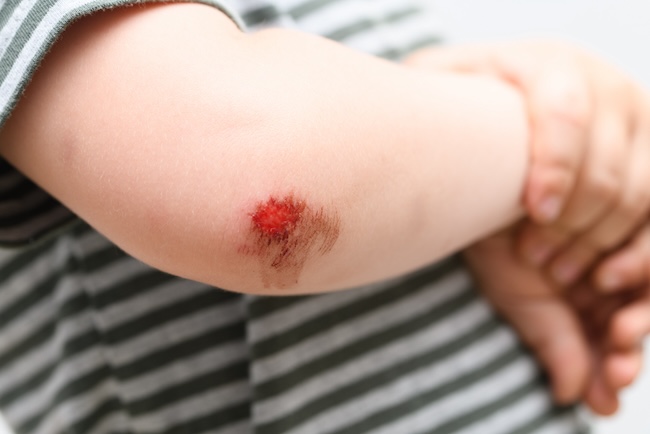
Pentingnya Antiseptik dalam Manajemen Luka
Antiseptik mampu menurunkan beban mikroba, mencegah infeksi, dan mengoptimalkan kondisi lingkungan luka untuk penyembuhan. Luka terbuka sangat rentan terhadap kolonisasi mikroorganisme seperti Staphylococcus aureus dan Pseudomonas aeruginosa. Jika tidak dikendalikan, mikroorganisme ini dapat membentuk biofilm, yang telah diketahui mampu memperlambat penyembuhan dan meningkatkan risiko infeksi kronik.
Namun demikian, antiseptik seperti chlorhexidine, sering dikaitkan dengan efek sitotoksik karena dapat menyebabkan kerusakan jaringan dan menghambat penyembuhan luka. Oleh karena itu, antiseptik modern idealnya tidak hanya memiliki aktivitas antimikroba yang luas, tetapi juga harus aman, tidak mengganggu regenerasi jaringan, dan dapat ditoleransi dengan baik oleh pasien.[1-5]
Mekanisme Kerja Octenidine dan Keunggulannya dalam Manajemen Luka
Octenidine umumnya tersedia dalam formulasi octenidine dihidroklorida, baik bentuk gel maupun likuid. Obat ini merupakan antiseptik golongan bispyridine yang memiliki spektrum antimikroba luas melawan bakteri.[1,2]
Mekanisme Kerja Octenidine
Mekanisme kerja octenidine bersifat non-spesifik, diawali dengan ikatan elektrostatis antara muatan positif (kationik) pada molekul octenidine dan permukaan sel mikroba yang bermuatan negatif. Sebagai senyawa aktif permukaan (surface-active), octenidine mampu menembus lapisan luar mikroba, seperti lapisan lipopolisakarida pada bakteri gram-negatif atau membran fosfolipid gram-positif, dan menyebabkan gangguan struktur lipid.
Mekanisme tersebut akan memicu disorganisasi membran sel dan lisis sel mikroba. Selain itu, sifat residu octenidine memungkinkan obat ini tetap aktif di area aplikasi hingga 48 jam, sehingga diharapkan akan memberikan perlindungan berkelanjutan terhadap kolonisasi ulang oleh mikroorganisme.[1-5]
Cakupan Antimikroba Luas
Octenidine telah dilaporkan memiliki efek antimikroba dalam spektrum yang luas. Ini mencakup efikasi terhadap bakteri gram-positif seperti Staphylococcus aureus, dan bakteri gram-negatif seperti Escherichia coli, Klebsiella pneumoniae, dan Pseudomonas aeruginosa.[5]
Octenidine juga menunjukkan aktivitas terhadap jamur, serta beberapa virus, dan mikroorganisme dalam biofilm. Selain itu, octenidine juga memiliki stabilitas dalam rentang pH luas (1,6–12,2), yang penting karena pH luka dapat berubah selama proses penyembuhan.[1,3-9]
Ramah Jaringan dan Umumnya Aman Digunakan
Octenidine telah dilaporkan memiliki toksisitas lokal dan sistemik yang rendah, serta tidak diabsorpsi secara signifikan, sehingga dianggap aman digunakan untuk semua usia, termasuk bayi dan anak. Octenidine juga jarang menimbulkan iritasi atau reaksi alergi pada kulit, serta tidak mengganggu regenerasi jaringan atau menyebabkan efek sitotoksik.[4,6,10,11]
Indikasi Penggunaan Octenidine dalam Manajemen Luka
Dalam setting klinis, octenidine bisa digunakan untuk manajemen luka abrasi, luka bakar superfisial, perawatan luka pada anak, dan luka pascaoperasi. Obat ini juga memiliki profil keamanan yang baik, sehingga sering menjadi pilihan pada neonatus. Selain itu, octenidine tetap efektif meski ada zat pengganggu seperti darah dan musin pada luka.[5]
Sebuah penelitian yang melibatkan manajemen pada 49 luka ulkus vena kronik menunjukkan bahwa octenidine wound gel, baik secara tunggal maupun kombinasi dengan dressing modern, menghasilkan reduksi ukuran luka yang signifikan dan lebih cepat dibandingkan penggunaan dressing modern saja.[12]
Hasil ini juga didukung studi lain yang melibatkan 45 pasien pascaoperasi, yang mana juga menunjukkan bahwa sisi luka yang dirawat dengan octenidine memiliki angka kejadian parut hipertrofik lebih rendah (4 vs 12 kasus), nyeri lebih ringan, dan skor kualitas jaringan parut yang lebih baik. Selain itu, octenidine menunjukkan peningkatan elastisitas kulit (distensibilitas) dan perbaikan transepidermal water loss pada fase awal penyembuhan.[13]
Octenidine merupakan senyawa aktif yang dikenal sebagai larutan antiseptik kulit dan luka. Selain itu, octenidine memiliki sifat broad spectrum, termasuk organisme patogen yang umum ditemukan pada infeksi luka dan bakteri yang resisten terhadap berbagai obat.[15]
Aspek Keamanan Octenidine dalam Manajemen Luka
Octenidine memiliki toksisitas yang jauh lebih rendah terhadap fibroblas dan keratinosit bila dibandingkan dengan beberapa antiseptik lainnya. Hal ini berarti bahwa octenidine memiliki sitotoksik yang rendah, sehingga lebih ramah terhadap jaringan dan tidak menyebabkan kerusakan luka lebih lanjut.[5]
Dalam beberapa uji klinis, tidak ditemukan perbedaan statistik bermakna dalam hal efek samping dari octenidine dibandingkan kontrol non antiseptik seperti cairan salin normal dan ringer laktat yang digunakan dalam manajemen luka. Ini mengindikasikan bahwa octenidine dapat ditoleransi dengan baik saat digunakan sebagai antiseptik untuk rawat luka. [10,11,14,16]
Pada penelitian ditemukan bahwa penggunaan octenidine cocok digunakan pada masa kehamilan karena bahan aktif octenidine tidak masuk melalui plasenta dan dapat ditoleransi dengan baik oleh ibu dan janin.[10]
Observasi klinis pada bayi prematur menunjukkan bahwa aqueous solution dengan 0,1% octenidine dapat digunakan sebagai pengganti antiseptik berbasis alkohol yang mengandung oriodine dengan aman selama tujuh hari pertama kehidupan. Berbeda dengan desinfektan berbasis alkohol, octenidine tercatat tidak memiliki efek samping lokal yang signifikan meskipun kerapuhan kulit ekstrem merupakan karakteristik populasi pasien yang diteliti. Oleh karena itu octenidine merupakan pilihan yang aman pada populasi khusus, seperti neonatus, ibu hamil dan ibu menyusui karena tidak ada laporan efek samping yang bermakna.[10,11]
Kesimpulan
Octenidine merupakan antiseptik yang memiliki spektrum antimikroba yang luas dan profil keamanan yang baik, yang dapat digunakan untuk semua kelompok usia. Berbagai studi in vitro telah menunjukkan bahwa octenidine efektif dalam menghambat pertumbuhan mikroorganisme patogen yang umumnya dapat menyebabkan infeksi luka.
Studi juga menunjukkan bahwa toksisitas octenidine jauh lebih rendah bila dibandingkan dengan beberapa antiseptik lainnya. Octenidine terbukti memiliki sitotoksik yang rendah, sehingga tidak menyebabkan kerusakan luka lebih lanjut dan lebih ramah terhadap jaringan. Octenidine dapat mendukung proses penyembuhan luka tidak seperti antiseptik lainnya yang dapat menyebabkan sitotoksisitas sehingga proses penyembuhan luka terhambat.
Octenidine dapat digunakan dalam manajemen luka, seperti luka abrasi, luka bakar superfisial, perawatan luka pada anak, dan luka pascaoperasi. Octenidine telah diteliti secara luas dan digunakan di berbagai negara sebagai antiseptik luka dan terbukti efektif dan dapat ditoleransi dengan baik.
Informasi lebih lanjut: